What is Footwear Structural & Insole Felt and what requirements is it selected for?
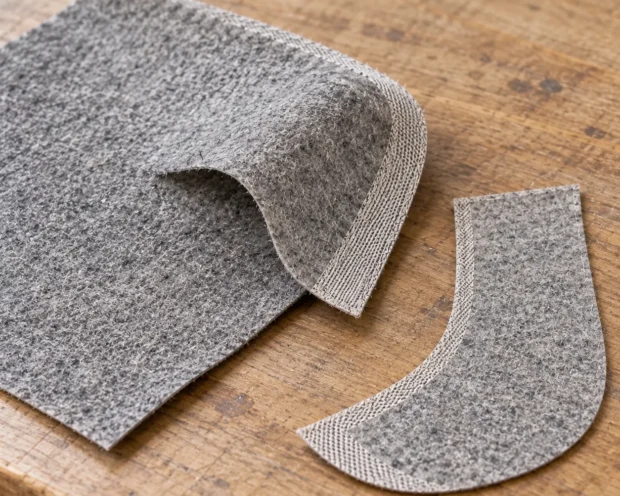
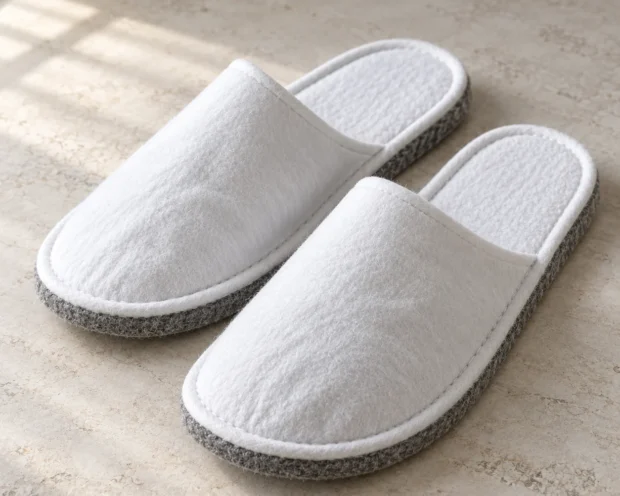
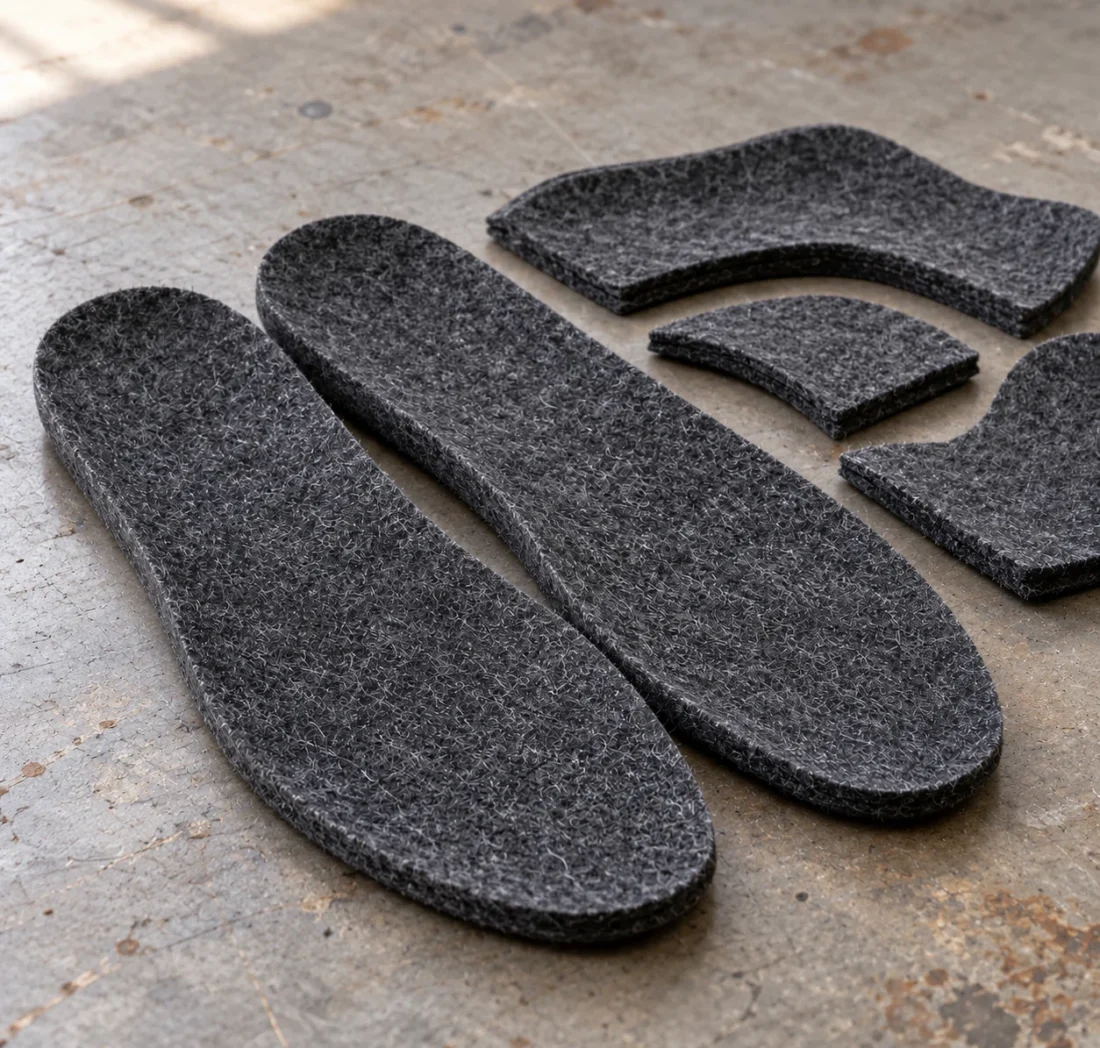
Footwear felt is die-cut to last geometry as a structural support, cushioning, or filler component in soles and uppers. Its mechanical role varies depending on where it sits within the shoe assembly.
When specifying footwear felt, clearly distinguish the functional requirements of an insole board, a bottom cavity filler, and an upper reinforcement strip. A part that measures accurately out of the clicking die does not automatically hold that geometry after lasting, cementing, and sole pressing. Inspect the forefoot flex line, edge skiving profile, and bond strength with adjacent layers in a lasted prototype. When producing a full size run, validate both the smallest and largest sizes rather than testing only the sample size.
In footwear production, specify the substrate the felt will be cemented to, the adhesive chemistry (e.g., water-based, solvent, or hot-melt), and the pressing sequence. Even when a structural insert remains hidden inside the shoe, its edges must feather smoothly so they do not telegraph through the upper or footbed. Bunching or delamination along the ball-of-foot flex zone directly impacts walking comfort. Whenever substituting an existing footwear component, document the exact reason for the change to guide material selection.
Die-cut structural and cushioning components for footwear: defining requirements before selection
When preparing an inquiry for Footwear Structural & Insole Felt, the starting point should be component position in the shoe assembly, forefoot flex line behavior, and die-cut geometry and adhesive bond. These three parameters explain why options offered under the same product name cannot simply be substituted for one another in every application. A technical drawing or photograph showing where the part fits is far more informative than an inquiry consisting only of a product name. If an existing sample is available, specify which characteristics should be retained and which should be modified. This ensures the evaluation is grounded in real production requirements rather than guesswork among visually similar materials.
For instance, when component position in the shoe assembly is a primary priority, the sampling plan should make that detail clearly observable. The acceptable outcome for forefoot flex line behavior should also be defined separately, while die-cut geometry and adhesive bond is evaluated as part of the end-use condition. Improving one property does not guarantee that the others will remain unchanged. Therefore, comparing alternatives using the same part dimensions, auxiliary materials, and processing sequence yields a much more reliable evaluation.
How are material structure, thickness, and dimensions evaluated?
When selecting Footwear Structural & Insole Felt, thickness, basis weight (GSM), and hand feel are complementary parameters. Basis weight indicates the mass of material per unit area, whereas thickness measures the cross-section of the layer; neither value tells the whole story on its own. Samples of similar thickness can exhibit different firmness or surface textures. Relate the required values directly to the function of the part. In particular, compare an option that looks suitable in terms of component position in the shoe assembly against your expectations for die-cut geometry and adhesive bond. A catalog title or product photo should never be used as a substitute for verified technical specifications.
When specifying width and length requirements, state the net part dimensions, cutting allowances, and machine/grain direction (if applicable) separately. If multiple parts will be nested from the same material, prepare a cutting layout. Whether roll, sheet, die-cut part, or finished product formats are available for your inquiry is clarified at the quotation stage. Where color is critical, proceed with a physical reference—screen brightness and studio lighting can alter how a surface appears.
Evaluating the sample in actual application
Share the die pattern drawing, cementing or stitching method, and target flex stiffness. Verify die-cutting precision and lasting retention in a prototype shoe.
During sample evaluation, first record the baseline state: dimensions, visible surface, edge structure, and how the material sits in the assembly. Next, process the part using your planned production sequence. Note your observations regarding forefoot flex line behavior again after processing is complete. Look for repeatable results rather than a single successful trial, and document which equipment and auxiliary materials were used to prepare the sample. That way, the reference for future repeat orders does not rely solely on memory or photographs.
At the end of the trial, describe the specific outcome rather than simply marking the sample as “suitable” or “unsuitable.” The accepted appearance for component position in the shoe assembly, the expected behavior for die-cut geometry and adhesive bond, and the permissible dimensional tolerance can be documented separately. Where the application requires certified technical performance, the test data must represent the exact product structure selected. Results obtained from a sample with a different thickness or fiber blend cannot be automatically transferred to a new specification.
Common selection pitfalls in application
One of the key issues to watch out for with this product is dimensional distortion during lasting or bunching along the forefoot flex zone. Rather than trying to solve the problem simply by choosing a thicker or stiffer grade, examine the root cause. Part geometry, bonding method, adjacent materials in contact, and the processing sequence must be considered together. Changing one variable at a time during sampling makes it much easier to identify which decision drives the final outcome. Keeping an unsuitable sample alongside the approved reference—with notes on why it was rejected—is also helpful for future evaluations.
Footwear Structural & Insole Felt pricing and wholesale order planning
When requesting a quote, share details on component position in the shoe assembly, forefoot flex line behavior, and die-cut geometry and adhesive bond along with the product name. Dimensions, material expectations, target quantity, and delivery format should be consolidated under a single clear specification. When comparing quotes, make sure the pricing units match: rates quoted per piece, per square meter, per linear meter, or per kilogram cannot be compared directly without conversion. Custom cutting, packaging, and dispatch terms should also be clarified separately. Current pricing, minimum order quantities, and lead times are provided in a formal quote tailored to your inquiry.
If recurring serial purchasing is planned, separate the initial trial or first-batch quantity from your estimated ongoing demand. Rather than combining different dimensions or colors into a single total volume, list them as individual line items. Include the key checkpoints that will be compared against the approved reference sample in your order notes. When submitting a sample and quote request through Keçe Fabrikası, attaching an application photo and technical drawing (if available) allows our team to focus immediately on the most suitable options.